Inventing industry-defining approaches that deliver both commercial value and social impact.
The thread through almost thirty years of work is trust: technology that makes institutions more trustworthy. It has meant banking systems in the early days of cash machines and internet banking, a mark on a diamond that any shop could check, and an open standard for proving where digital media comes from, now built into widely used AI products.
Today I chair a coalition of AI labs, universities, civil society and public bodies working on responsible AI. This is where I write down what I have learned, usually with the people I learned it from.
- Trust and provenance
- Governing AI
- Open standards
- From idea to institution
Writing
Feed for readers and agents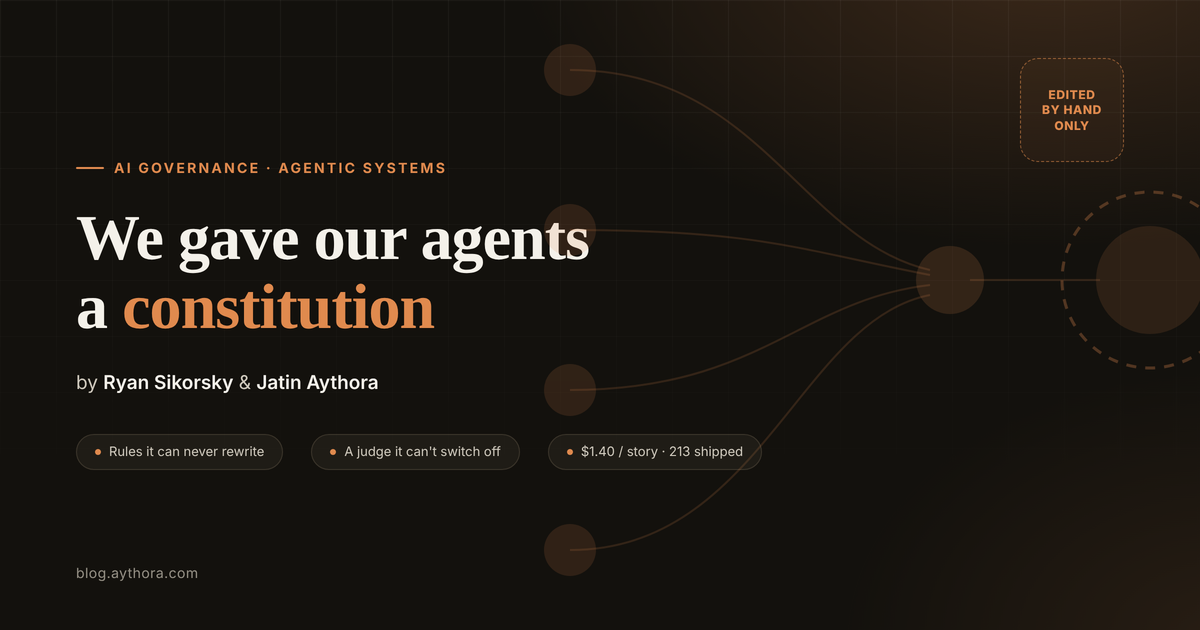
We gave our agents a constitution
How a three-person team governs a self-improving coding agent with rules it can never rewrite.
The next piece is being written
New essays land here, each credited to the people who shaped it.
In my own words
Credit first
Credit goes to the people who did the work, and I like to name them where it counts.
Disagree well
The best decisions I have made were improved by someone disagreeing well. I expect to be challenged.
Give it away
The durable position belongs to whoever convenes the standard everyone else builds on, so I give standards away and keep the leadership.
Start small, stop early
Most ideas should die cheaply and early. Nothing gets scaled without evidence.
Back the operators
I bring strategy, narrative and the conviction to start things, and I back people who run them better than I could.
Conclusion first
The point comes first, then the reasoning, short enough to use.
New posts, as they are published
One feed for people and software: a JSON Feed for readers and agents, plus an index written for AI agents. No newsletter and no tracking beyond basic traffic counts.